This story was written by Aaron Walker and originally published by Windspeaker.com
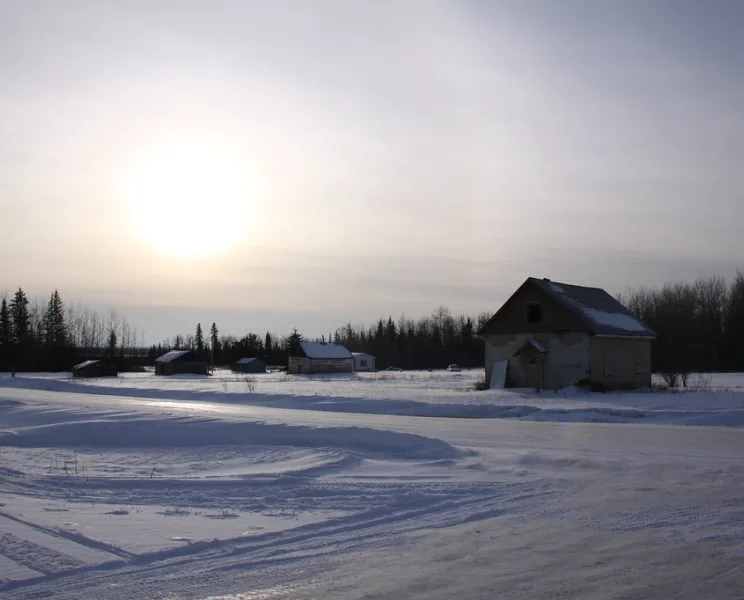
A small, remote First Nation in northern Alberta is undertaking a major initiative to build climate-resilient structures in response to the increasing regularity of debilitating smoke from wildfires and the impacts of environmental change.
On evenings when new building plans are discussed with members of the Lubicon Lake Cree Nation, the process often begins not with blueprints, but with a shared meal. Residents gather to talk about where a doorway should go, how a kitchen should feel, or how a space can better serve families who live in close relation to the land.
Those conversations are helping shape a series of new buildings that are designed to reflect both the realities of a changing climate and the priorities of the people who live in the territory.
“It’s very community-based,” said Janice Willier, health projects co-ordinator with Lubicon Lake Band #453. “We meet with community members and invite everybody over. We have supper first, and then we talk and adjust things based on what the community thinks they need.”
That approach now sits at the heart of a large-scale, one-of-a-kind infrastructure effort, marking what local leaders say is the first time a First Nation has applied the CRIS across an entire community. CRIS connects local governments and Indigenous communities with climate experts to integrate low-carbon resilience into infrastructure projects.
At Lubicon Lake, more than a dozen major buildings are being planned or constructed with the overall initiative expected to run through 2028. The work includes a new school, health centre, continuing care facility, administration building, fire hall and public works infrastructure, alongside road, water, wastewater and solar projects.
To date, 19 homes have been completed, with approximately 125 more planned. While most of the larger buildings are expected to be finished within the next few years, the full housing build‑out is anticipated to take several more years to complete.
The work goes beyond construction, reflecting a response to a changing climate and a renewed focus on how the Nation lives on its land.
Wildfire smoke has become a defining reality across northern Alberta, with immediate and disruptive impacts in Lubicon Lake. Last year alone, the community shut down operations for about 14 days due to poor air quality, Willier said. During those periods, offices closed, health services paused and residents stayed home.
“Fourteen business days is a lot of downtime for a small Nation,” she said.
Portable air filtration units were distributed to homes, but could only filter a single room, while key buildings were not equipped to operate during prolonged smoke events.
The experience revealed how vulnerable the community’s infrastructure was.
“We started with fire and smoke,” Willier said. “But then we realized there’s so many other things we have to plan for.”
Willier pointed to “extreme hot and cold” and “higher highs and lower lows,” along with stronger storms, shifting seasonal patterns, and the long-term impacts of permafrost. Although not specified in this case, similar projects that factor in permafrost must account for shifting ground that can affect foundations, changes in drainage that can lead to water pooling or erosion, and increased maintenance requirements due to freeze-thaw cycles.
Tegan Martin-Drysdale, new infrastructure project manager with Lubicon Lake Band, said those conditions required practical changes.
“We’ve added backup generators because it’s not just wildfire season. We also face winter storms, ice and high winds,” she said. “When the power goes out at minus 30 or minus 40, we need to keep everyone warm, so homes now include backup heat sources like wood stoves.”
To address these overlapping risks, Lubicon Lake worked with CRIS and Simplify Energy to develop a climate resilience toolkit, which provides a locally tailored guide that informs all current and future builds and ensures new designs respond to conditions exposed during smoke and fire seasons.